The Legend of Zelda: The Wind Waker FULL GAME playthrough on the Nintendo Gamecube, no commentary! This is one of my favorite and one of the best Zelda games of all time. This recording plays through the entire game in one sitting to complete The Legend of Zelda: The Wind Waker.
The Legend of Zelda: The Wind Waker is an action adventure game developed and published by Nintendo.
The Legend of Zelda: The Wind Waker Full Game Review
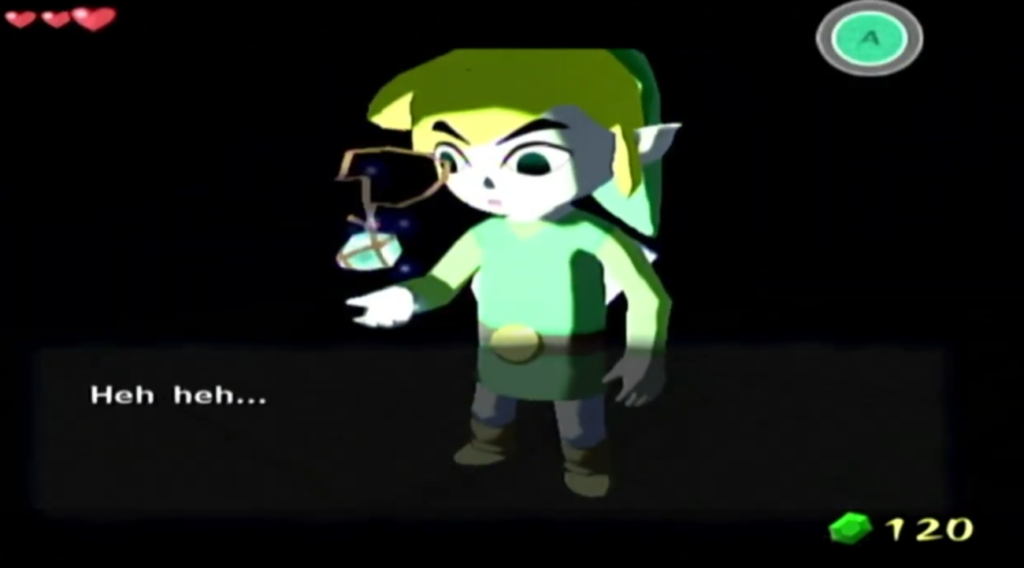
The Legend of Zelda: The Wind Waker is regarded as one of the most divided Zelda games in the series. So many people love this game, and so many people hate it, giving it a bad review because of “too much water”. Personally, I think this one of the greatest games in the Zelda series. I love the artistic design for the game, and despite all the time spent sailing, I think it did a great job of creating an open world feel in the early 2000’s.
The game starts you off on Outset Island celebrating your birthday and traditional coming of age. You leave the tower that wake up in and go visit your grandma who gives you the traditional garb that the Hero of Time wore. Your adventure starts here when you go to return to your sister who gives you her Telescope which you use to watch pirates chasing the Helmaroc King, trying to save Tetra. You witness Tetra being dropped at the top of Outset Island and go to save her. After saving Tetra, you leave the top forest on the island only to find your sister crossing the bridge to you. As she tries to cross, she gets snatched by the Helmaroc King that was originally searching for Tetra.
This kicks off the beginning of the game where you join up with the pirates to go to Forsaken Fortress. Forsaken Fortress does a great job of introducing several mechanics in the game. You’re introduced to several of the common enemies in the game, like rats and Bokoblins, as well as a stealth mechanic that isn’t really seen afterward. After entering and successfully navigating through the Forsaken Fortress and being thrown out by Ganon, you awaken on Windfall Island.
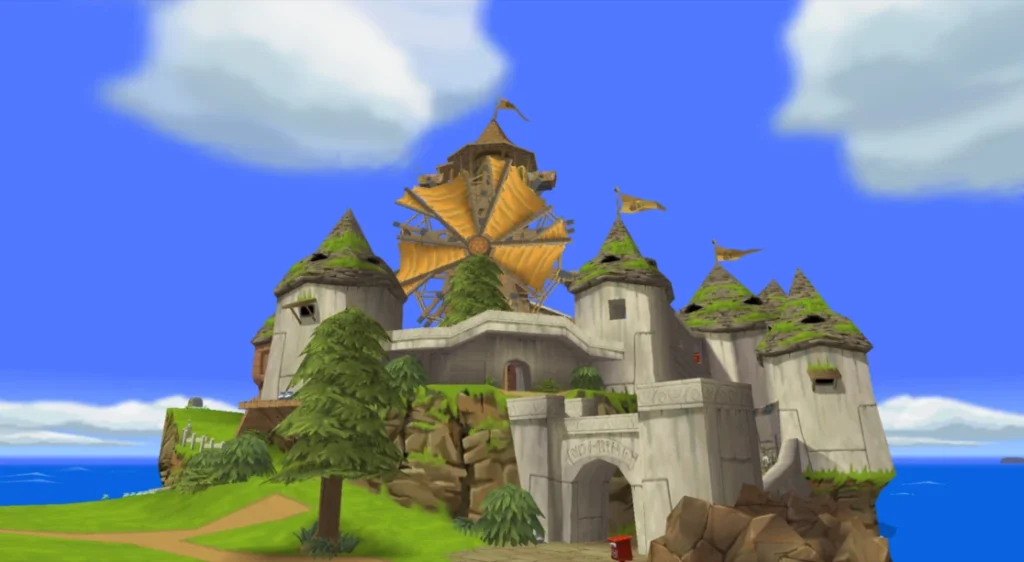
After awakening in Windfall Island, you find you have been saved by the King of Red Lions who found you floating in the sea. He explains what happened and where you are, outlining that your goal on the island is to find a sail so that you can begin traveling efficiently in the sea. This is where the game also beings introducing side quests, like playing tag with the Killer Bees, or helping them get their teacher a present for her birthday.
After getting your sail, you’re able to travel to Dragon Roost Island where you’re given the Wind Waker. Near the back of the island you find the Wind’s Requiem which allows you to change the direction of the wind. You can’t actually use this until after you’ve completed the island’s dungeons and acquired Din’s Pearl, but all in due time.
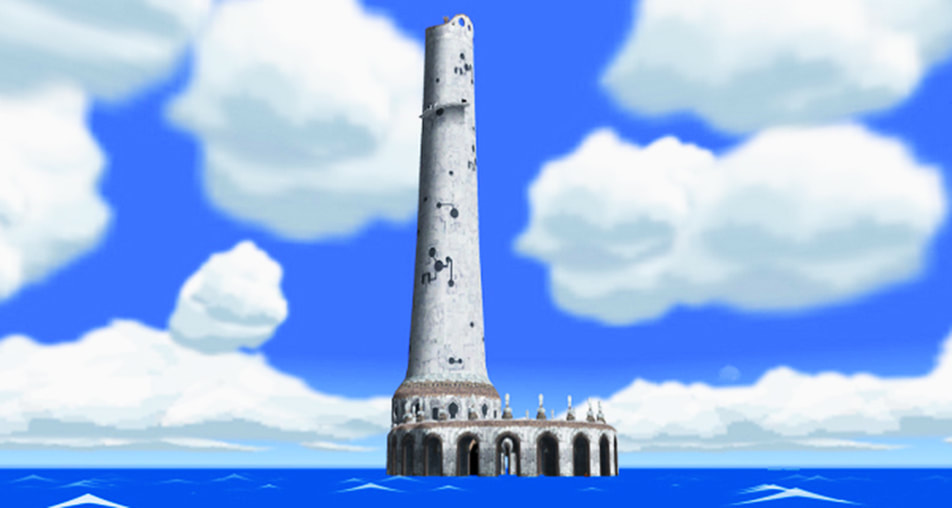
After arriving on the island it’s explained that you must find the three pearls that open up the Tower of the Gods. Dragon Roost Island holds Din’s Pearl, and you’ll need to find Farore’s and Nayru’s later. You’re introduced to the Rito after, and it’s explain that Valoo the dragon atop Dragon Roost Island has been angry and causing problems for the Rito. This is where you’re introduced to the first real dungeon of the game.
Dragon Roost Cavern is the first real dungeon of the game. It introduces the core dungeon mechanics – small keys, dungeon maps, compass, boss key, and warp pots. It’s a simple dungeon and it serves as a great entry to the general dungeon style in the game. It’s not too long, super easy and linear, and not hard to figure out.
After completing Dragon Roost Cavern and defeating the boss, Gohma, you receive Din’s Pearl and you return to The King of Red Lions. It’s at this point that the beginning of the game is finished, and the world opens up for true exploration.
It’s worth mentioning that if you’re still reading at this point, I’m not here to actually summarize the entire game, but I felt like going over the beginning of the game served as a fairly important part of this review. From this point beyond, I’ll just be focusing on the actual review, rather than a synopsis of the story up to this point.
Gameplay Review
With all of the core mechanics and the story introduced, it’s time to actually focus on the full review. From here out we’ll be going over the game and how it’s played, how it feels, and the story.
One of the cornerstones for how good a game is for me, depends on how good the movement in a game is. There’s no shortage of Gamecube games that bad or at best, sub par movement. Fortunately, the Wind Waker isn’t one of those games. Starting from the very beginning of the game, you’re given pretty much all movement that’s available in the game. The exception to this is just the necessary movement related items that you pick up, like the Deku Leaf or the Grappling Hook.
You run quickly, and you can roll to move even quicker. Unlike other Zelda games, your roll isn’t direction locked. You’re able to turn freely while rolling. Swimming doesn’t feel bad either. It’s a big slow, but again you have free and fluid movement. You can turn 180 degrees without needing to spin in a circle or do a loop to turn around. You just turn instantly and it feels good.
The running in the game is just as free. You run in any direction you like, you feel fast with quick responsive directional inputs that let you change your direction easily. It’s very rare to feel like the game rejected some of your inputs when moving around in this game.
The Story
The story in The Legend of Zelda: The Wind Waker is similar to most other Zelda games. You start off waking up like in so many other games, and you find that you need to save someone from Ganon. At the start of the game, it’s your sister, but the game diverges from other stories where you’re not saving the original girl that you started off trying to save. In this story, after you successfully rescue your sister, you find out that Tetra is actually Princess Zelda who ends up being kidnapped by Ganon.
That’s really the only divergence from the traditional Zelda stories that are written into the games. By the end your goal is still to save the princess from Ganon, and throughout it you must fight through dungeons and various locations. The game does a pretty good job of explaining each change in the story as well as giving you the context for the next area you’ll be going to. It properly introduces a blend of old and returning characters like the Deku Tree, as well as introducing new characters like Medli and Makar.
The conclusion of the story is pretty on par with other Zelda games as well. You defeat Ganon and the world reverts to a safe iteration and you say goodbye to the friends you made along the way while returning home. It’s pretty on par for Zelda games. HOWEVER, this is a review for the game individually, so I’m comparing it to ALL games. Or at least other games on the Gamecube.
Short answer? After playing hundreds of different Gamecube games, I can safely say that most games don’t have much in terms of a story, and a lot of the ones that do have poorly written stories at best. A lot of the time games will send you from one level to another with minimum explanation or just some short cutscenes. The Wind Waker does an exceptional job at filling in the gaps and providing you with context for what’s going on, what your objective is, who the characters are, what their role is, so and on and so forth. The story for the game is incredibly well structured and it provides the necessary information for a story to feel complete.
The Gameplay
The Legend of Zelda: The Windwaker has great gameplay. My thoughts on this tend to fall back on the movement that I elaborated on previously. To me, a lot of what makes a game good depends pretty strictly on how well it handles. If you can move around freely and your inputs aren’t rejected and the game responds how you want it to, the game is generally good, even if I don’t enjoy the game. This isn’t the only aspect of gameplay of course, but this is the most noticeable part of the gameplay, and The Wind Waker excels in terms of movement.
The story is great as well. It’s very well explained and fairly well written. A lot of locations don’t feel repetitive with the exception of sailing across The Great Sea, but that’s part of the open world exploration feel for a game of this age so I don’t hate it.
The game offers a variety of unique items that aren’t really ever seen outside of The Wind Waker either. Some of the items are seen in some of the less played games like Phantom Hourglasses Grappling Hook, but the item selection is seldom repeated for most items which creates unique gameplay restricted to this game.
The Ambience & Soundtrack
I think The Wind Waker does an excellent job in building its worlds. The sound effects in Dragon Roost Cavern feel really suitable for the interior of a volcano, and the music played while sailing The Great Sea feels adventurous and suitable for such a large and expansive world. The small fairies flying around in Forest Haven and the art etched into the Tower of the Gods just build what feels like a really complete world which if we’re being honest, is expected from one of Nintendo’s shining stars. You expect something amazing when you play a Zelda game, and this game delivers. The soundtrack is memorable and it stands out among other Gamecube titles as something that I would consider great.
The Conclusion
I’m sure it’s fairly obvious by how I wrote and worded this review of the game, but this game is something that I would consider amazing. It’s no surprise when I bought this game with a birthday gift card when I was still just a little kid and played it for hours on end that I love it, I’ve grown to be able to appreciate games for what they are as an adult and I’m able to look at things objectively.
The Legend of Zelda: The Wind Waker does an excellent job at building its world gradually and introducing you to the game. The gameplay itself feels wonderful and eve after over 23 years it still feels good to play on original hardware. The graphics have aged well thanks to the art style chosen for the game, and the gameplay is enjoyable. You’re never really left with a moment in the game where you feel like there’s nothing to do. Even if you’re lost in the story and unsure about the exact next step, you can always get a hint but more importantly, you can take the time to explore the world and find so many unique locations and various side quests that it feels perfectly fine to not know what to do in the story.
I love this game, and I’ve loved it since I was a little kid, so it’s not surprise that I still treasure the game as much as I do. This is one of the games that I would recommend to anyone, but if someone was new to the series, it’s one of the games I’d recommend as an entry game to the series as well. It’s a beautiful game, and I’m always happy when I revisit it for a new playthrough.